
Featured Blogs
User Blogs
Finding the Art to Collaborative Leadership
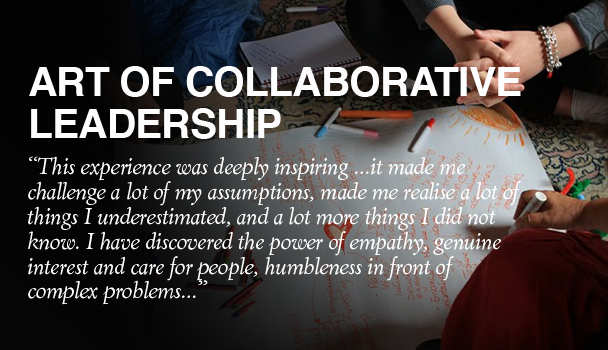
As the complexity of our local, translocal and global issues increases at a rapid pace, we are realizing that there is no one solution and likely no one hero that will sprinkle the magic dust to make it all better. It is a time to shift to the potential and intelligence of the collective, to step up and accelerate our learning and deepen our capacities - quickly, but with depth, humour and rigor.
This summer, I was part of hosting a group of twenty-six social innovators and change agents from the UK, Europe, Middle East, Canada came together to explore the Art of Collaborative Leadership. We are "field" of practice leaders who called this gathering as we are all collaborating in two large-scale systemic transformation projects - the Finance Innovation Lab and Tasting the Future. This was an incredible opportunity to take a deep dive into what we have been learning together in this work – and to invite others to learn with us.
We stayed at West Lexham, itself an ambitious, innovative model for rural social enterprise in the UK. It is a hub for community renewal and the homeplace of the founder and his family that has a beautiful vision for collaboration and community evolution. And together we asked, What is the leadership needed to envision and host the fundamental systemic changes we seek for a sustainable future?
Using a wide range of methodologies, we explored the forms of relationship, organizing patterns, conceptual models, hands-on practices and processes that catalyse and support systemic shifts that will sustain people and planet. We shared real-time projects, including the learning from our work together these past 2 years in the Lab and Tasting the Future. We also explored how collaborative leadership can support nascent seedling projects and the real-time organizing in the revolution and protests in Greece. More than a training or a workshop, it was a participatory enquiry into the diversity of all of the participants’ experiences, projects and movements.
What did we see together?
We need to be prepared to transform ourselves. Hosting this work changes us from the inside out – and the deeper we go with our own transformation – the deeper and wider we can hold systemic transformation,
Systemic transformation is about relationship. The level of relationship we have with ourselves and with one another in our core teams will determine the depth of, and level of complexity, we can work with “out there.” Cultivating core teams that operate from a deep level of commitment and intimacy can hold the depth and breadth needed for wider transformation.
Structures and processes create pathways for change. Transforming human systems needs process architecture and design that focuses on convening people and creating a minimal/optimal structure that cannot ensure specific outcomes but invokes the highest impact possible.
The capacity to learn together is essential. Learning is a core capacity for any kind of sustained systemic change – if we are not learning, we are not changing so cultivating learning and practice grounds for successes and failures.
The biggest impact for me was to see the how alone innovators and people with powerful ideas for change generally feel. And how in coming together with not just models and methodologies, but with joy, empathy and with witnessing, we find deep connections within our own selves and with each other that create the kinds of relationships that can persevere through hard times, and that can really get down and celebrate the good things.
Click here to read our initial Art of Collaborative Leadership invitation.
To join Tasting the Future, click here.
- Vanessa Reid's blog
- Login or register to post comments