
Podcast Archive

Collaborating for Impact
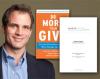
In this podcast, Paul Born interviews John Kania about his groundbreaking work on multi-sector collaboration and collective impact. John is author of the fabulously fresh and highly popular paper in The Stanford Social Innovation Review entitled Collective Impact (Winter 2011). John has been part of mobilizing amazing energy around the work of collaboration that leads to collective impact. As the Managing Director of FSG, a leading international social impact consulting firm, he brings a rare lens on the work of community change and innovation. John is also co-author of the acclaimed new book Do More Than Give: The Six Practices of Donors Who Change the World, Wiley & Sons (2011).

Take the Seminar!
Learning Objectives:
- To explore the meaning of community
- To appreciate the impact of isolation on ourselves and our communities
- To give voice to a new narrative about community
- To examine the role of questions and other structures in creating community
Access Podcast Highlights...
- What is Collective Impact?
- The Challenge of Solving Deep Problems
- A Common Agenda
- Shared Measurement Systems
- Mutually Reinforcing Activities
- Continuous Communication
- Backbone Support Organizations
- Catalytic Donors and Collective Impact
John's work on collective impact began to take shape when he and his colleagues at FSG spent time exploring the question, "What will it take for society to do a better job of achieving large scale social change on complex problems?" Ultimately they concluded that what was needed was "more aligned and coordinated activity that cross-sectoral in nature." Listen here as John defines collective impact.
The Challenge of Solving Deep Problems
While the need to work collectively to solve complex social issues seems immediately obvious, the reality is that working collectively can be challenging, not only because it different sectors have different ways of thinking and different languages, but also because there are many incentives to work in isolation. While acknowledging these realities, John offers an alternative mindset that must be embraced when working collaboratively in the following clip.
In John's study of collective impact there are five conditions that are necessary to support true alignment and generate powerful results. The first of these conditions is: A Common Agenda. To establish a common agenda, a multi-sector group must come together and focus on the following three things:
- A common understanding of the problem
- Agreement on a common set of strategies for addressing the problem; and,
- Agreement to jointly address the problem and hold one another accountable
Listen here as John offers an example of the work of creating a common agenda.
While he acknowledges that the field of shared measurement systems is still in its infancy, John stresses the importance of having common ways to measure and report on success on the common agenda. He believes that collecting data and measuring results consistently on a short set of indicators at the community level is both essential and doable. In the clip below, John shares information about resources and approaches to establish shared management systems.
Mutually Reinforcing Activities
Over time, because various players within a system are working collectively, talking regularly and interacting more frequently around shared measurements, they begin to develop a much better sense of the work of various partners. This leads to less duplication among them and opportunities to reinforce one another's efforts more effectively. This is what creates mutually reinforcing activities. In the clip below, John offers an example to illustrate this condition in action.
John describes this condition as one that is "blindingly obvious" and yet he is quick to note that many collaborative do not continuously communicate well. While there are certainly tools to facilitate this, John believes you cannot under-estimate the importance of face-to-face conversations and building trust. In the clip below, he outlines one of the key elements that can facilitate effective, continuous communication.
Backbone Support Organizations
The Backbone Support Organization is a central part of the infrastructure of effective collaboration. Their role is to facilitate the alignment, coordination and collective problem–solving across multiple organizations and partners. They ensure the strategic coherence of the overall effort. These organizations require a broad set of skills that are rarely held within any one organization. In the following clip, John describes this set of skills.
Catalytic Donors and Collective Impact
John offered a quick overview of his latest book, Do More Than Give which explores how high-impact donors can facilitate change in the world. In the clip below, he describes what he calls "Catalytic Donors" and how – by moving beyond the traditional donor role – they have the capacity to impact change.
GOING DEEPER
- Of the five conditions for successful collective impact, which do you see as strengths of your collaborative?
- Which condition would you most like to strengthen? And why?
Collective Impact – This article, co-authored by John Kania, was published in the Winter, 2011 issue of the Stanford Social Innovation Review. It concludes that large-scale social change requires broad cross-sector coordination, yet the social sector remains focused on the isolated intervention of individual organizations.
FSG Social Impact Consultants - FSG is a nonprofit consulting firm specializing in strategy, evaluation, and research, founded in 2000 as Foundation Strategy Group and celebrating a decade of global social impact. John Kania has been a Board member and Managing Director of FSG for the past nine years.
Breakthroughs in Shared Measurement and Social Impact – This webpage contains research which highlights 20 social enterprises that developed innovative and coordinated web-based approaches to evaluate their impact across multiple grants and stakeholders.
In Search of Collective Impact – This article, from the January 2011 Issue of Engage! Magazine, offers a review of Collective Impact
Catalytic Philanthropy - This is the first chapter of Do More Than Give the latest book co-authored by John Kania. It reveals how foundation leaders, trustees and individual donors can rise to address the complex challenges facing our increasingly interdependent world. While it’s a book about philanthropy, the authors don’t focus on how to give away money. Donating is an important starting point but not the end point in how high-impact donors catalyze change in the world.
What Does It Take for Philanthropy to Deliver Results? – This article co-authored by John, was published in Fortune magazine in June 2011. It challenges the belief of donors that they can simply throw money at a problem and hope for the best. Research is showing that successful philanthropy goes beyond providing funds and engages donors to actually participate in creating change.
Do More Than Give – This latest book, co-authored by John Kania outlines six core practices of donors link shows how a distinct type of donor helps solve pressing social and environmental problems by going beyond traditional philanthropy. The authors studied a diverse mix of high-impact funders. These inspirational donors' stories range from the world’s largest private foundations and corporations to families, to community and place-based foundations. While the sizes of their assets vary, these donors still share a critical trait: They each go beyond simply giving money away to proactively solve significant social problems.
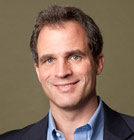 John Kania: John is the author of the fabulously fresh and highly popular paper in The Stanford Social Innovation Review entitled Collective Impact (Winter 2011). John has been part of mobilizing amazing energy around the work of collaboration that leads to collective impact. As the Managing Director of FSG, a leading international social impact consulting firm, he brings a rare lens on the work of community change and innovation. John is also co-author of the acclaimed new book Do More Than Give: The Six Practices of Donors Who Change the World, Wiley & Sons (2011).


©2011 Tamarack — An Institute for Community Engagement