
Podcast Archive

White House Council on Community Solutions

Take the Seminar!
In this audio seminar, Paul Born speaks with Paul Schmitz a founding member of The White House Council on Community Solutions about the Council's work to build a national movement that champions collaborative community approaches to build healthy communities and about his own work with Public Allies, a national non-profit that cultivates community leadership.
Learning Objectives:
- To explore the work of The White House Council on Community Solutions
- To learn why the Council embraced community collaborations as key to generating solutions with collective impact
- To meet Paul Schmitz, member of the Council and CEO of Public Allies: a firm focused on community leadership
Access Podcast Highlights...
- Paul Schmitz: White House Council Member
- The White House Council on Community Solutions
- Building Community Capacity to Collaborate
- Why A Focus on Youth?
- Everybody Leads: Understanding Community Leadership
- Balancing Community and Elected Leadership
- Reflection Questions
- Links & Resources
- Meet Paul Schmitz
Paul Schmitz: White House Council Member
Paul Schmitz opened the call by sharing about his own background with Public Allies, a national non-profit focused on cultivating community leadership, where Barack Obama served as a founding board member. First Lady Michelle Obama also worked for Public Allies for many years, and opened Public Allies' Chicago office.
During the election campaign, Paul served as co-chair of the civic engagement policy group and was a member of the urban policy group and a member of Barack Obama's transition team. He also served as an advisor to the Office of Social Innovation and Civic Participation - which ultimately sponsored the formation of The White House Council on Community Solutions.
Listen below to the following clip as Paul describes the two areas of primary focus for the Council's Work:
- Finding pathways to employment for the 6.7 American young people currently out of school and out of work; and,
- Building the capacity of communities to work collaboratively towards collective impact.
The White House Council on Community Solutions
Paul offered listeners an outline of the Council's process emphasizing that, in spite of it involving a number of high profile individuals, the Council was very much a "working" council that was very hands-on. He had high praise the Council's Chair Patty Stonesifer, who had been with the Gates Foundation, for setting the tone and for her wisdom to drive the Council's work in ways that were mindful of the election cycle.
Though the council formally wrapped up earlier this month, the White House continues to support its work. Now, as private citizens, the members of the Council are also free to continue to advocate for and support the Council's recommendations as private citizens during the remainder of this, an election year.
Listen in the clip below as Paul summarizes the Council's timetable up to the present.
Building Community Capacity to Collaborate
One of the Council's key priorities has been that, "Every American community will have the knowledge and tools at hand to create successful local "collaboratives" that are designed to catalyze large scale change and address their most pressing community challenges." Paul shared a story about reading an article about Milwaukee having the lowest fourth-grade reading scores for African-American kids in the country and how that was a catalyst that ultimately led him to realize that programs alone weren't enough to solve tough problems. This, in turn, led him to appreciate the distinction between organizational outcomes and community solutions. It also led him to search out initiatives that embraced the collective impact approach that John Kania and others have profiled. Inspired by these insights, Paul brought this thinking forward to The White House Council.
In the clip below, Paul articulates the fundamental reframing that is at the heart of the Council's commitment to community-led, collaborative solutions.
The decision to focus specifically on the issue of America's disconnected youth was one that was set by the White House. However, it was also a moral and economic issue that resonated very deeply with all the members of the White House Council as well. In today's tough economic climate, when even a high percentage of young people with college degrees are unemployed and under-employed, more marginalized youth who lack a high-school education and/or face multiple barriers to employment can easily be overlooked. The Council saw that choosing to focus their attention and resources on this issue could help to ensure that this would not happen.
Listen in the following clip as Paul explains the Council's rationale and highlights some exciting new developments that confirm that their work is already starting to have impact.
Everybody Leads: Understanding Community Leadership
Paul's book, Everybody Leads: Building Leadership from the Community Up highlights the work and principles that have been at the core of Public Allies for the past twenty years. Public Allies' focus is on the building of leadership at the community level. Their work has focused on uncovering and nurturing leadership within young people who have a passion to make a difference. It is a focus that is less on credentials and more upon character and has led Public Alllies to find powerful leaders where no one else looks. The book is a practical how-to resource that focuses on three particular elements of building community leadership, the beliefs that: we all have the capacity to lead; the core act of leadership is taking responsibility; and, values are the "secret sauce" that give life to leadership.
In the clip below, Paul expands upon the five values that he sees as essential to nurturing leadership at the community level.
Balancing Community and Elected Leadership
In the dialogue with participants at the end of the call, one listener posted a question asking for advice about how to balance the tension between community input and input from a council who may want to adapt recommendations in ways that aren't true to the community input.
In the clip below, both Paul Schmitz and Paul Born offer advice and ideas on addressing this issue from their own experiences.
Reflection Questions
- What is most needed in my community to transform organizational outcomes to community-wide impact solutions?
- How can I nurture community leadership where I live and work?
- Personally, what inspires me most about the work of The White House Council on Community Solutions?
- The White House Council on Community Solutions - This website profiles The White House Council on Community Solutions, including a factsheet and Chair's Overview, that profile the Council's work.
- Community Collaboratives Whitepaper - This paper, one of the resources developed by the White House Council, profiles examples from across the U.S. that demonstrate that through collaboration, more CAN be done achieved to generate powerful solutions to a range of challenging issues.
- Community Collaboratives Toolbox - this Toolbox includes a detailed guide of key activities and resources to structure and sustain collaboratives and effectively generate meaningful community participation in these efforts. It is made up of four primary tools that each includes additional resources to support collaboratives in working towards success.
- Case Studies of Effective Collaboratives - This articleprofiles concrete examples of collaborative community efforts that have demonstrated significant results in addressing tough problems like crime, high school graduation rates, and math test scores.
- Community Solutions for Opportunities Youth - This final paper of The White House Council on Community Solutions profiles the Council's key issue of focus: "putting every young person on a clear path to economic opportunity."
- Needle-Moving Community Collaboratives - This paper, co-authored by Paul Schmitz and published by the Bridgespan Group, reviews a number of successful cross-sector collaborative and synthesizes the core operating principles; key success factors; and supportive resources that collaboratives need to fulfill their primary roles: convening, facilitation, data collection, communications and administrative support.
- Public Allies - Paul Schmitz is the CEO of this national non-profit organization that cultivates community leadership and champions the belief that, "lasting social change results when citizens of all backgrounds step up, take responsibility, and work together."
- Everybody Leads: Building Leadership from the Community Up - This book by Paul Schmitz is organized around a new definition of leadership that believes it is: an action everyone can take, not a position few hold; about taking personal and social responsibility to work with others on common goals; and, about practicing values that engage diverse individuals and groups in collaboration. Watch the video trailer.
- Michelle Obama's Reflection on Public Allies - In this youtube clip, Paul Schmitz reads a speech by Michelle Obama - who was the founding executive director of Public Allies Chicago - which is profiled in his book Everybody Leads.
Meet Paul Schmitz
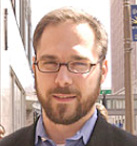 Paul Schmitz was appointed by President Barack Obama as a founding member of The White House Council on Community Solutions. The Council's role is to lead a nation-wide, community capacity-building movement that champions collaborative approaches for building healthy communities. As the CEO and founder of Public Allies, Paul brings his expertise in cultivating community leadership and his belief that, "lasting social change results when citizens of all backgrounds step up, take responsibility, and work together" to his work at the White House Council. In addition to his primary roles with Public Allies and the White House Council, Paul serves as co-chair of Voices for National Service, serves on the board of Independent Sector, blogs on leadership for the Washington Post, and is a faculty member of the Asset-Based Community Development Institute at Northwestern University. He is the co-author of Needle-Moving Community Collaboratives an article published by The Bridgespan Group and is the author of the 2011 book, Everyone Leads: Building Leadership from the Community Up.
A nationally recognized social innovator, Paul's work has garnered considerable recognition and praise. He was selected as a Next Generation Leadership Fellow by the Rockefeller Foundation, was recognized by the Nonprofit Times as one of the 50 most powerful and influential non-profit leaders in America, and is a recipient of Fast Company magazine's Social Capitalist Award for innovation. Paul graduated phi beta kappa from the University of Wisconsin-Milwaukee in 1994 with a degree in political science and received the university's Graduate of the Last Decade alumni award. He lives in Milwaukee with his three children, Maxwell, Maya, and Olivia.


©2011 Tamarack — An Institute for Community Engagement