
Featured Blogs
User Blogs
Belonging and Invitation
When it was published, I read and re-read Todd Barr’s blog post, “The End of Collective Impact”. I found it to be full of reflections on many of the things that I’ve been thinking about recently, particularly inclusiveness and belonging. What struck me the most about his piece was the suggestion of a sixth condition for Collective Impact, “the need to incorporate structures of belonging into every aspect of a Collective Impact initiative.” As I read the post, I was thinking more broadly about work under the Collective Impact umbrella, so not necessarily a specific Collective Impact initiative, but rather any time we try to do work as a collective.
What I’ve been thinking about is the authenticity with which we make invitations, and how we sometimes equate invitation to inclusion. It’s similar to the way people equate equality and equity. I’m sure we’re all familiar with this cartoon:
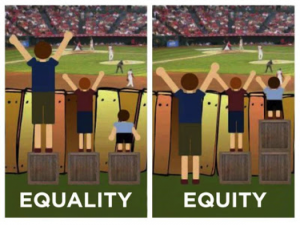 I think that the same idea applies to invitations. Sometimes, we cannot issue the same invitation for everyone (I mean this both literally and figuratively: some people respond to emails, others to phone calls, others to an in-person chat over coffee). Especially when we see that it’s the same people who don’t show up over and over again. We need to think about our invitation, and how we’re creating space for belonging, rather than putting the blame on the people who are not showing up. We make a lot of assumptions about them – they’re not interested, they’re too busy, they don’t want to play nicely with others, when maybe in fact it’s our invitation that is not right for them. We also need to think about why it is important to us if they are there. Is their presence important, critical even, for the collective work? Is attending important for them? What value will it add to their work if they participate?
We need to make space for honest conversations about why people don’t respond to invitations.
In the case of our work at Fostering Change, we believe that our invitations are genuine. They’re warm. They’re funny. They’re always free and include delicious healthy food. So why wouldn’t people show up?
Maybe they don’t have the organizational capacity to make staff available. Maybe they are concerned that they will feel uncomfortable or isolated. Because of their culture, because of their gender identity, because of the way they dress, because they need to ask for bus fare to get there, because of what happened to them last time they came to a meeting like this.
The truth is we’ll never know why they aren’t coming if we don’t have established relationships with people that allow for these conversations to take place. So, much of the work of the invitation takes place before the invitation is even extended to participate in a collective experience. The invitation is crafted in the relationship-building. And the invitation to return is crafted in the continued deepening of trust and relationships over time.
- Trilby Smith's blog
- Login or register to post comments


©2011 Tamarack — An Institute for Community Engagement